- Home
- Child Support
Child Support Help and Information
The main purpose of awarding child support is to ensure that a child's standard of living remains relatively the same after his or her parent's divorce or separation. Every state has guidelines and worksheets which are used to establish how much support will be awarded, often using the incomes of both parents and the number of minor children from the marriage in their calculations.
Generally, the obligation for support will continue until a child reaches the age of 18 or graduates from high school, but there are exceptions that you can read about in the articles below. Additionally, you'll find information to help you understand the laws and how support is calculated, various payments options, and different methods of support enforcement.
The Basics of Getting Child Support - Both parents have a responsibility to support their children after a separation or divorce. Find out how support is calculated, collected, and enforced.
How is Child Support Calculated? -This depends on your state’s child support guidelines and your unique circumstances. Find out what factors are used to determine the amount of child support that will be ordered.
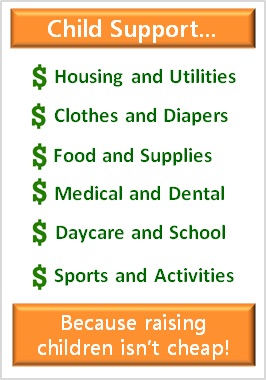
What Does Child Support Cover – If you aren’t sure which expenses child support is meant to cover, here are the different things to consider.
Extraordinary Expenses – Child support orders ensure a child’s basic needs are met, but what about expenses that go beyond that scope? Some common examples include extracurricular activities, private school tuition, visitation-related travel expenses, and more. Find out the rest here.
Support Payment Options - Learn about the various methods of paying and receiving support, along with the pros and cons of each and alternatives you may not have considered.
Questions about Child Support Payments - Many divorced moms are curious about when their child support will start, whether their ex can reduce the payment without going to court, or if someone else can receive their support payment. Find answers to these questions, plus many others.
Tips for Enforcing and Collecting Support - Even though you have support orders, you may still run into hassles getting the money you are owed. Here are some tips to help enforce the payments.
Child Support FAQs - Get answers to your questions concerning support from our legal expert. Brette discusses payment and enforcement concerns, medical and extracurricular expenses, the impact of joint custody and paternity on support, and more.
Temporary Support - Getting a temporary support order can help ensure that you can continue to provide for your children's basic needs during a separation or while your divorce is pending.
Other Temporary Orders - Until your divorce is finalized, your attorney may file other temporary orders which address certain aspects of support, which parent will be responsible for certain bills, occupancy of the family home, and more. Read over these frequently asked questions to see how they apply in your situation.
Who Pays for Childcare After Divorce - Childcare expenses can be a point of contention for parents after a divorce. Learn how daycare and childcare expenses are divided and the reasoning behind it.
Court Ordered Medical Insurance – All child support orders require that the medical needs of the dependent children be addressed. This includes requiring a parent to provide health insurance coverage. Learn how this is handled.
Uninsured Medical Expenses and Child Support - Responsibility for uncovered medical expenses for a minor child can be addressed in the child support order. Find out what expenses are included.
Court Ordered Life Insurance - When negotiating your divorce settlement, it’s a good idea to include a stipulation that life insurance be maintained by the supporting spouse. Such a policy can help guarantee that child support will still be paid even if the paying spouse dies before the support obligation ends.
Child Support Modification - Before granting an adjustment in the amount of support to be paid, the court requires proof of a change in circumstances. Find out how different situations will affect the level of child support.
Joint Custody and Child Support - Even if parents share joint custody, one parent may still be responsible for paying a certain amount of child support. This is because courts want to ensure the child is properly cared for regardless of where the child is staying. Find out what is considered.
When Does Support End - How long is a parent obligated to pay support and when does it end? It depends on your divorce decree and if your child is emancipated. Find answers to these questions and more from the legal expert.
Collecting Back Support - Unfortunately, not all parents feel a financial sense of responsibility for their children and end up not paying the support that was ordered. If you're trying to collect the delinquent support, these tips can help.
Contempt of Court Motions to Enforce Support - If your ex has steadily refused to make the support payments, one way to collect what you are owed is by initiating contempt proceedings. You can learn more about what to expect and how to file a motion for contempt in this article.
Paternity and Support - Sometimes the issue of paternity is brought up in a support case where minor children are involved. For example, will a husband owe support if it can be proven he's not the biological father? To understand what is taken into consideration in the decision, read through these answers from the legal expert.
Support and Visitation - Is not receiving support payments a valid reason for denying visitation to the other parent? Can support payments be reduced if the children begin spending more time with the non-custodial parent? Find out more.
Life Insurance Issues - Guaranteeing that support payments are made if the supporting parent dies.
College 529 Plans in Divorce - 529 plans are a tax-efficient a way to pay for college expenses. If you already have such a fund established, here are some things to be aware of when you are going through a divorce.
Stay Up to Date!
Get exclusive articles, tips, and resources
Plus receive your FREE divorce ebook
Most Popular
Reasons to Sell Your Wedding Ring

How to Create a Parenting Plan
Get Expert Advice About Divorce and Custody!


Your Wedding Ring After Divorce
7 ideas on what to do with it
Preparing for a Divorce Financially
Key steps to building financial awareness.
Steps to Take Before Divorce
Prepare strategically and legally.
Recovering Financially from Divorce
How to regain stable financial footing.
Financial Documents for Divorce
Information needed for negotiating a fair settlement.
Is a Divorce Lawyer Really Necessary?
What to consider if you are thinking about doing your own divorce.
Best Way to Sell an Engagement Ring after Divorce
These tips can help turn your marriage bling into money.